People arrive for their first session carrying one version of a question: what actually happens in there? The honest answer is that the experience is different for everyone. And yet, in the most important ways, what unfolds follows a consistent pattern. This is what I can tell you about it from the inside.
I want to describe this carefully, because there are many things that circulate as descriptions of "past-life sessions" that bear no resemblance to what I do. There is no pendulum, no guided visualization, no suggestion of what you will experience. There is no attempt to induce a trance or deepen relaxation beyond the natural settling that comes with lying down comfortably and closing your eyes.
What there is, instead, is directed conscious attention. And that is where everything begins.
Before the Session: The Presenting Issue
Every session starts with a conversation. I want to understand what has brought you. Not your entire history. We are not beginning a long-term talk therapy relationship in the conventional sense. I want to understand the specific issue: the pattern that keeps repeating, the fear that has no clear origin in this life, the relationship dynamic that does not yield to understanding, the physical symptom that corresponds to no medical cause.
This is the thread I will follow into the session. The more specific and concrete the presenting issue, the more precisely we can find its source.
The Process: Conscious Review
When we begin the actual session, you lie down comfortably. You close your eyes. I ask you to take a few breaths and allow your attention to settle. You are not going to sleep, and you are not entering a trance. You are, in fact, paying closer attention than usual, but inward rather than outward.
I then direct your attention toward the issue we have identified, typically through its emotional core rather than its story. Anxiety, for instance, has a felt sense. A relationship wound has a distinct feeling. I ask you to locate that feeling and follow it, allowing your consciousness to trace it backward in time to its origin.
What most people find, sometimes within minutes, is that they arrive at an experience they did not consciously know they had. It may be from an earlier point in this life. More often, it is from another time entirely: a different body, a different century, a different life. But the emotional reality of it is instantly recognizable as connected to what brought you here.
We simply uncover and resolve the key past-lives that cause problems in the present life. The shift happens not by adding something new, but by removing what no longer belongs.
During the Session: What You May Experience
The experience during a session is hard to compare to anything familiar. It is more vivid and specific than imagination, more emotionally resonant than memory, and unlike a dream because you remain fully alert throughout. Many people describe it as reviewing: watching and feeling a scene rather than simply imagining it.
You remain in full control. You can open your eyes at any moment. You can ask me questions, you can choose to step back from something that feels overwhelming, you can simply describe what you are seeing as it unfolds. I am present throughout, asking questions that help you move through the experience rather than directing you to specific conclusions.
The material that surfaces varies enormously: scenes from what appear to be other centuries, other countries, other bodies and circumstances. Emotional charges that have been held for what can feel like a very long time. Physical sensations that correspond to experiences in the scene being reviewed. And, often, an immediate recognition, a sense of "this is why" that arrives not as a thought but as a felt understanding.
The Moment of Resolution
The work of a session is not only to find the past-life origin of a current pattern. It is to complete the experience, bringing the consciousness that was interrupted at the moment of trauma to the point of full integration. When this happens, the emotional charge that has been held in suspension discharges.
This is not a dramatic event. It is quiet. It often feels like relief, like a long-held breath finally released. Some clients cry, not from distress, but from the recognition of something they have been carrying dissolving. Others simply go still, and then describe a sense of lightness that is new to them.
When the burdens are gone, suddenly you experience a freedom of mobility and expression that you accept as only natural. Nothing is added — but the weight you had been carrying is suddenly lifted.
After the Session: The Days That Follow
Changes from a session can be immediate or can unfold over the days that follow. The shift is not always fully perceptible in the room. Sometimes clients leave feeling simply calm, and then report a week later that the pattern that had been driving them for years simply isn't running anymore.
I always suggest a good night's sleep after a session. The integration happens partly during rest. And I ask clients to be patient with themselves; the adjustment to being free of something you have been carrying for a very long time takes a little time in itself.
What I often hear afterward is some version of the same thing: the issue has shifted in a way they had not experienced before.
What a Session Cannot Promise
I will not promise that one session resolves everything. Some presenting issues have multiple past-life roots and require more than one session to address fully. Some people need more time to integrate before proceeding to the next layer of work.
What I can say is that something real happens in a session, something the client can feel, something that leaves a measurable trace in the weeks and months that follow. The work is genuine, the process is consistent, and the results, while individual, are not rare. They are what happens when you actually find the cause.
Dr. Charles Richards is the founder of Causation Therapy, a consciousness-based psychotherapy method developed over more than thirty years of clinical practice. He works with clients privately and trains therapists internationally.
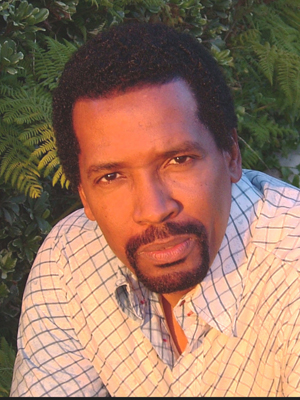
Licensed psychotherapist with over thirty years of practice. Founder of Causation Therapy, a consciousness-based method for resolving the root causes of emotional and karmic wounds. Author, teacher, and founder of Realization Psychology.
Try It Yourself
A Past-Life Experience
Now that you know what a session looks like from the inside, you may simply want to have one. This is a single 90-minute session to experience a past life directly, for its own sake. No presenting problem required, and no course of work implied.
Ready to work with this directly? See session options, or start with the free booklet What Karma Really Is.