When most people hear "past-life therapy," they picture a darkened room, a swinging pendulum, and a therapist guiding a deeply relaxed client into scenes from another century. That is hypnotic regression. What I do is categorically different, and that difference is the whole point.
I want to be clear about this from the outset, because the distinction matters both clinically and ethically. Hypnosis and consciousness-based past-life work are not simply variations of the same approach. They operate on different principles, produce different results, and carry different risks. Understanding why helps explain how Causation Therapy works.
What Hypnotic Regression Actually Does
Hypnotic regression works by inducing a trance state, a significant narrowing and deepening of consciousness, and then directing the client's attention backward in time. The idea is that under hypnosis, memories become more accessible, and past-life material can be explored.
The problem is fundamental: you are using a trance state to explore a trance state.
Consider what happens when trauma is created. Whether in this life or a prior one, extreme pain or loss causes the conscious mind to shut down to protect itself from overload. The person enters a trance. In that trance state, the unconscious records everything literally: every sensation, every word, every suggestion, all without the filter of conscious discernment. That unfiltered recording is the trauma imprint itself.
Now, if you then use another trance state to explore that first one, you have introduced a second set of unfiltered suggestions. The therapist's words, tone, phrasing, and expectations all pour directly into the client's open unconscious, contaminating the very material you are trying to uncover. The client may produce experiences that feel real and meaningful but are shaped, in ways neither party can detect, by what has been suggested.
We found that the most effective way to resolve trauma — whether in this life or a past one — is for the client to review the experience in full consciousness. Otherwise you are attempting to use a trance state to resolve a trance state.
Why Full Consciousness Changes Everything
Causation Therapy, which I developed as Soul Journeys therapy over three decades of clinical practice, requires the client to remain fully awake and alert throughout the entire process. There is no induction, no relaxation script designed to suppress consciousness. The person lies down comfortably, closes their eyes, and directs their attention consciously, as one might during a focused meditation or a vivid piece of imagination.
But what they access is not imagination. It is memory. You recognize the difference by its specificity, its emotional charge, its physical resonances, and, in many cases, its verifiability through historical records.
Because the client is fully conscious, their own discernment remains intact. They can distinguish between what they are actually experiencing and what they might be embellishing. They can describe details without being led. And crucially, when a traumatic moment is revisited and discharged, it happens with the full force of conscious awareness. That is what actually neutralizes the original charge.
The Role of Consciousness in Resolution
Understanding why consciousness is essential to resolution requires understanding what trauma is.
When extreme pain occurs, especially at the moment of death, the soul cannot fully integrate what is happening. Consciousness shuts down before the event is complete. The charge from that experience remains suspended, unresolved, carried forward into the next life as a frozen energetic pattern. It does not diminish over time. It waits.
To resolve it, the person must be able to return to the event as a fully conscious witness: to experience what happened completely, to understand it from their current adult perspective, and to discharge the emotional and energetic residue that has been held in suspension. This requires awareness. You cannot discharge a charge from inside a trance.
It even worked for those who didn't necessarily believe in past lives, but were willing to try it for results. The experience itself was the evidence.
Who This Is For — and Who It Isn't
One of the things I appreciate about the consciousness-based approach is that it does not require belief. I have worked with committed skeptics (scientists, medical doctors, rationalists of every variety) who came out of intellectual curiosity or professional interest or sheer desperation after other methods failed. Many of them experienced past-life material that was vivid, emotionally compelling, and resolutely specific in its historical detail. Whether they subsequently chose to interpret that material as literally real or as a deeply meaningful psychological metaphor was their own decision.
What was not debatable was the result. The patterns that had driven their presenting issues, the anxieties, the relationship dynamics, the inexplicable physical symptoms, shifted or resolved following the sessions. That outcome does not depend on belief. It follows from the process.
The Difference Between Exploring and Resolving
It is worth stating plainly: past-life therapy done only for the purpose of exploring, of satisfying curiosity about who you may have been, is a very different enterprise from past-life therapy done for therapeutic resolution. The latter requires precision. It requires following the emotional thread that connects the past-life material to the present-life pattern. It requires not just remembering an event, but fully discharging the charge it left behind.
When that discharge happens in full consciousness, the effect is generally immediate and unmistakable. Clients describe a sense of something lifting. A weight they have carried so long it felt like part of them, suddenly absent. Not suppressed. Gone. That is what resolution feels like. Nothing has been added to the person. Something has been removed.
Dr. Charles Richards is the founder of Causation Therapy, a consciousness-based psychotherapy method developed over more than thirty years of clinical practice. He works with clients privately and trains therapists internationally.
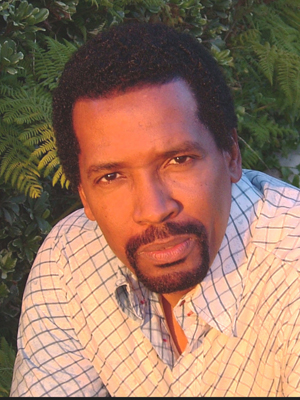
Licensed psychotherapist with over thirty years of practice. Founder of Causation Therapy, a consciousness-based method for resolving the root causes of emotional and karmic wounds. Author, teacher, and founder of Realization Psychology.
Go Further
Soul Journeys: The Soul’s Path Between Lives
A fuller account of the process described here: what a session opens, where it goes, and what has been found there across three decades of guiding people through it in full waking consciousness.
Ready to work with this directly? See session options, or start with the free booklet What Karma Really Is.