There is a distinction that most people have never been offered in a clinical setting, and it changes everything about how you understand healing. Managing a symptom and resolving its cause are not the same thing. They look similar from the outside. Inside, they are profoundly different.
Modern mental health treatment is extraordinarily skilled at symptom management. We have medications that quiet anxiety, therapies that reduce the frequency of depressive episodes, techniques that teach the nervous system to regulate its responses. These are real contributions, and for many people they are genuinely life-improving.
But management is not resolution. And for the people I work with, many of whom have spent years managing symptoms that do not yield, the distinction is the difference between a life that is livable and a life that is actually free.
What a Symptom Is
A symptom is the visible expression of something happening at a deeper level. Anxiety is a symptom. Depression is a symptom. A recurring pattern of abandonment in relationships is a symptom. Chronic physical pain with no identifiable medical cause is a symptom. A compulsion you can understand intellectually but cannot stop is a symptom.
Symptoms are not random. They are information: the surface expression of an energetic charge that lives at a deeper level. The symptom is trying to tell you something. It is, in a sense, a signal from the actual wound pointing toward where the wound lives.
The problem with treating only the symptom is that the signal keeps firing. You quiet it temporarily, and it returns. You manage it more skillfully, and it finds new expression. Because the source has not been addressed.
The problems you think you have in your life are merely the symptoms. They are bells and whistles designed to get your attention — pointing toward something that lives much deeper.
What a Cause Actually Is
In my understanding, developed over thirty years of clinical practice, the cause of most persistent emotional and behavioral patterns is an unresolved charge from a prior traumatic experience, one that in many cases does not lie in this lifetime at all.
When extreme trauma occurs, particularly at the moment of death in a past life, the consciousness cannot complete the experience. Something is left suspended: an emotional charge, an imprint, a pattern of reaction that was formed under duress and never discharged. That unresolved charge travels with the soul into subsequent lifetimes as the basis for the patterns that now drive you.
This is what a cause actually is, at the level where it matters. Not the story, not the narrative of what happened. The energetic residue that remains when the story could not be completed.
Why Insight Doesn't Resolve It
Understanding a cause is not the same as resolving it. This distinction catches many people off guard, because it is natural to assume that insight leads to change. And it does, at the level of thought and behavior. But thought is not where the charge lives.
I have worked with clients who arrived with twenty years of insight into their patterns. They could describe the dynamic with clinical precision. They understood its origin, its mechanism, its expression in every relationship they had ever had. And they were still in it. Because the charge that drove the pattern was not in their understanding. It was in their soul's memory, a level of experience that thought cannot reach.
What changes the charge is not understanding it. It is returning, in full consciousness, to the point where it was created, and completing the experience that was left suspended. That is what Causation Therapy does. And the result is not understanding. It is resolution.
Once the core past-life relating to a karmic pattern has been reexperienced and discharged, symptoms disappear and behavior changes almost instantaneously.
What Resolution Looks Like
When a charge is resolved at its actual source, clients do not report that the anxiety is better managed or that the pattern is somewhat reduced. They report that it is gone. Not suppressed. Resolved. Like a file that has been deleted rather than simply hidden.
The shift is often faster than people expect. Not because the work is superficial. Quite the opposite. It is fast precisely because it addresses the actual cause rather than its expressions. Once the foundation of a pattern is removed, the pattern has nothing left to stand on.
I sometimes use the analogy of a computer running a corrupt program. You can manage the symptoms: closing windows, restarting applications, working around the errors. But until you find and delete the corrupt file itself, the program keeps running. When you find it and remove it, the machine simply works. Nothing dramatic. Just the absence of something that was not supposed to be there.
Choosing Between Management and Resolution
I want to be clear: management is sometimes the right choice. If someone is in acute crisis, stabilization is the priority. If someone is not ready to look at the source, building coping skills serves a purpose. There is no hierarchy that places resolution above management in all circumstances.
But for people who have spent years managing a pattern and are ready to ask a different question, ready to look at where it actually began, resolution is available. Not as a promise, not as a guarantee, but as a consistent outcome of work that takes the cause seriously.
The question to ask yourself is simple: are you managing something, or are you resolving it? If you have been managing for a long time, and the symptom persists, it may be time to look for the cause.
Dr. Charles Richards is the founder of Causation Therapy, a consciousness-based psychotherapy method developed over more than thirty years of clinical practice. He works with clients privately and trains therapists internationally.
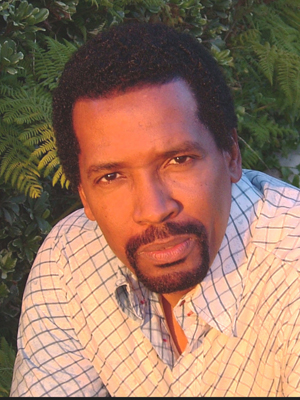
Licensed psychotherapist with over thirty years of practice. Founder of Causation Therapy, a consciousness-based method for resolving the root causes of emotional and karmic wounds. Author, teacher, and founder of Realization Psychology.
The Whole Series
The Way of Karma: All Five Booklets
The difference between a symptom and its cause is the foundation everything else rests on. The complete series follows it all the way through: how karma works, how it carries forward, what resolves it, and what happens at the end of a life.
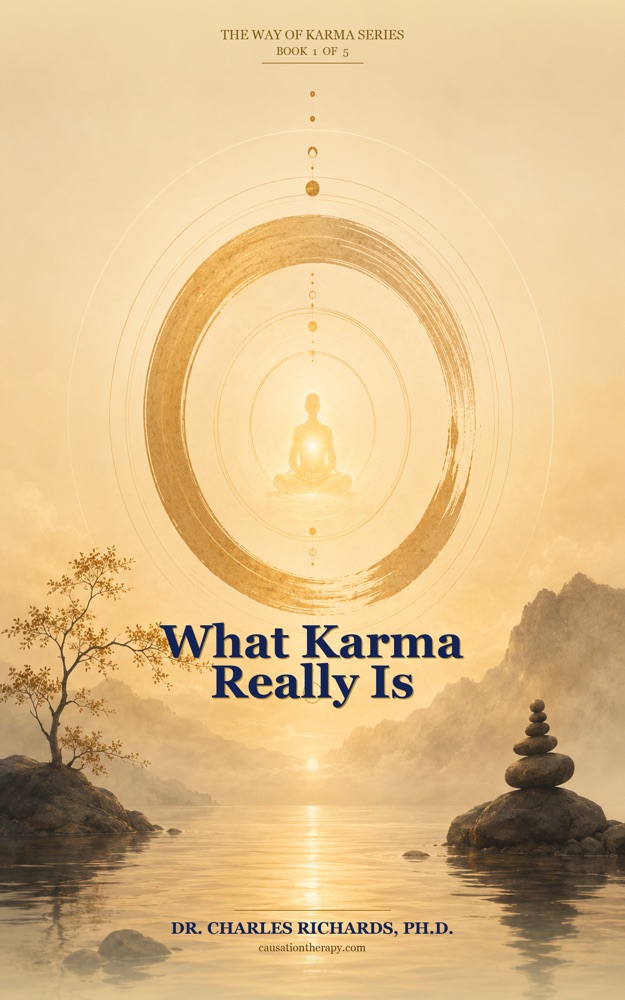
Ready to work with this directly? See session options, or start with the free booklet What Karma Really Is.