People sometimes hear about a client who experienced significant relief after a single Causation Therapy session (a chronic pain that lifted, a fear that dissolved, a relationship pattern that simply stopped repeating) and they ask: can that really happen in one session? The honest answer is: sometimes, yes. But it depends on things that vary considerably from person to person.
I want to be clear from the outset: I do not promise single-session resolution, and I never have. That would be neither honest nor responsible. What I can say is that the method is working at a level of depth that makes rapid change genuinely possible, and for some people, one session is enough to shift something they have been carrying for years. For others, the work unfolds more gradually. Understanding what determines which is true for any given person is worth exploring carefully.
Why Some Change Happens Quickly
Causation Therapy goes to the past-life experience where the charge was first created and facilitates a conscious review and discharge of that experience. When the discharge is complete, the pattern loses the foundation that was generating it. It is not that behavior changes through new conditioning. It is that the charge driving the behavior is gone.
This is why change can sometimes happen faster than people expect. Not because the work is superficial, but because depth and duration are not the same thing. When the right source is found and genuinely resolved, the result can be immediate and lasting.
Changes come not by adding something new, but by removing what was never supposed to be there in the first place. When the burden is gone, suddenly you experience a freedom of mobility that you accept as only natural.
What Determines How Many Sessions Are Needed
In my experience, three factors most directly influence how quickly resolution happens and how much work is required to get there.
The first is the depth and complexity of the issue. Some patterns have a single clear past-life origin. When that origin is found and discharged, the pattern dissolves. Other patterns have multiple roots, layered across several lifetimes or intertwined with other unresolved experiences. Working through those layers takes more than one session. There is no way to know in advance how many roots a given issue has, and I would be misleading you if I implied otherwise.
The second factor is the client's flexibility: their capacity to enter the process openly, to follow the thread of their own experience without too much resistance or pre-judgment, and to allow what is there to be reviewed rather than defended against. Some people move through past-life material with remarkable fluidity from the very first session. Others need more time to find that ease. Neither is a failure; it simply reflects where someone is in their readiness to engage at that depth.
The third factor is commitment: the degree to which the person genuinely wants the issue resolved, not merely understood or managed. This is subtler than it sounds. Some clients arrive with a strong conscious desire to change, but discover in the work itself that there is some part of the pattern they are not yet ready to release. That is not a judgment; it is simply honest. And when the commitment is full, when someone is truly willing to go wherever the work needs to go, the process tends to move with much greater speed.
What Clients Report When One Session Is Enough
The pattern I hear most consistently from clients for whom a single session proves decisive is something like this: they leave feeling calm, sometimes a little tired, not dramatically different in the moment. And then, over the days that follow, they notice. The anxiety that had been present for twenty years is simply not there. The relationship dynamic that activated in every significant partnership of their adult life does not activate. A physical symptom that had preceded every episode of the recurring pattern is absent.
Clients sometimes call me to report this with a mixture of relief and quiet bewilderment. "Something is different. I can't quite explain it. But the thing that was always there? It's not there anymore."
Some of the most striking examples involve changes that extend to people who were not even in the session. When a karmic charge between two people is resolved in one of them, the dynamic between them can shift, even when the other person has no knowledge of the work. I have had clients report that a parent who had been cold or distant for their entire life became suddenly open and warm in the days following a session, with nothing in the external circumstances to account for it.
It happens so naturally that clients sometimes forget to notice at first. And then they realize: the thing that was always there is simply gone. Not managed — gone.
When the Work Takes Longer
For many clients, particularly those bringing deep or long-standing patterns, the work unfolds across several sessions. Addressing one layer reveals the next. The first session resolves one origin point; a follow-up session is needed to reach another. This is not a failure of the method. It is the method working honestly, at whatever depth the issue actually lives.
I also find that after a significant session, some clients benefit from a follow-up that is more conversational. The purpose is not to do more past-life work, but to help them integrate what has changed. When something you have carried for a long time is suddenly absent, there is an adjustment period. The freedom itself needs to be understood and settled into.
Sometimes I find myself actually slowing the pace, suggesting a period of integration before doing further deep work, because the changes from one session need time to fully land before the next layer is addressed. This is a sign the work is real, not a sign that more is always better.
The Right Way to Approach a First Session
The most useful way to enter a first session is not with an expectation of how much will resolve, but with a genuine willingness to go as far as the work needs to go. Come with an open question rather than a fixed outcome. Be willing to follow your own experience wherever it leads, without directing it toward a predetermined conclusion.
What I can promise is that the work goes to the level where the pattern began, and that at that level, change is possible. Whether that happens in one session or several is something we discover together. The honest answer to "can one session really change everything?" is: for some people, yes. For others, it begins something that continues to unfold. In either case, it is reaching the right place.
Dr. Charles Richards is the founder of Causation Therapy, a consciousness-based psychotherapy method developed over more than thirty years of clinical practice. He works with clients privately and trains therapists internationally.
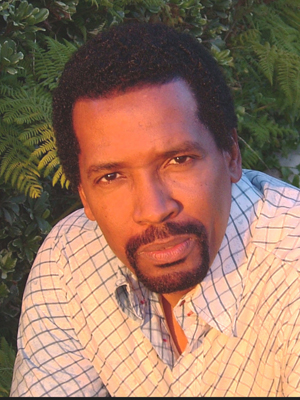
Licensed psychotherapist with over thirty years of practice. Founder of Causation Therapy, a consciousness-based method for resolving the root causes of emotional and karmic wounds. Author, teacher, and founder of Realization Psychology.
The Whole Series
The Way of Karma: All Five Booklets
If you want to understand the method well enough to judge it for yourself before booking anything, the five booklets are the shortest honest route. Read them in an evening.
Ready to work with this directly? See session options, or start with the free booklet What Karma Really Is.