The most intense relationships in your life, the ones that seem inexplicably charged, impossibly difficult, or hauntingly familiar from the first moment, are not accidents. They are the surface expression of bonds that were formed across multiple lifetimes. Understanding this changes everything about how you see the people closest to you.
Karmic trauma is a term I use to describe the unresolved emotional and energetic charges that a soul carries from one lifetime into the next. These are not abstract concepts. They are specific, rooted in specific events in specific lifetimes, and they express themselves with great precision in the relationships of the present life.
What this means practically is this: the people who trigger you most deeply, who push buttons you cannot explain, who generate feelings either positive or negative that are disproportionate to what the situation seems to warrant, these people almost certainly have a history with you that extends well beyond this current lifetimeencounter.
How Karmic Trauma Is Created
When a soul experiences extreme trauma, particularly at the moment of death, or in situations of profound loss, betrayal, or violation, the consciousness cannot complete the experience. Something is left unfinished. An emotional charge is formed that does not discharge naturally, because the circumstances that created it did not allow for resolution.
That unresolved charge travels with the soul. It does not diminish over time. It does not simply fade. It enters the next life as what I would call a core frequency, a specific pattern of reaction and attraction that shapes which souls you are drawn to, which dynamics you recreate, and which wounds keep reopening even in entirely different circumstances.
This is karmic trauma: the accumulated charge from prior-life experiences that operates below the level of conscious awareness, driving relationship patterns you cannot choose your way out of.
The wounds hidden deep in our psyches continue to draw people, events, and circumstances that mirror back to us our most unconscious selves, until the moment we are ready to look at what is actually driving them.
Why Some Relationships Feel Instantly Familiar
One of the clearest signs of a karmic connection is the sensation of recognition that has no rational explanation. You meet someone and feel you know them immediately — not in the sense of having met them before in this life, but in a deeper, inexplicable sense of familiarity. The relationship intensifies faster than logic would suggest. The emotional stakes feel higher than the history between you warrants.
This recognition is not imagination. It is the soul's memory registering a soul it has encountered before, in another time, another body, another set of circumstances. The intensity of the response corresponds to the depth of the karmic history. The longer and more charged that history, the stronger the pull. As a result, I often say we don't fall in love, we fall in karma. It's the driver behind the romance phase of a relationship also referred to as projection in traditional psychology. When projections begin to dissipate, the true nature of the relationship is revealed, and the karmic charge that has been running it becomes more apparent.
This can express as powerful attraction. It can equally express as powerful repulsion: an inexplicable irritation or aversion toward someone who, by all objective measure, has done nothing to justify the feeling. Both responses point to the same thing: a prior-life charge that has not yet been resolved. It's typically a mixed bag of both karmic polarities from a past life or lives, which is why the relationship can often feel so intense and confusing.
The Four Kinds of Karmic Bonds
In my work with thousands of clients over three decades, I have come to recognize that karmic relationships operate at four distinct levels.
Some relationships are built on what I call karmic debt: a history in which harm was done between two souls, creating an imbalance that draws them together in this life to work it through. These are often the most intense and most difficult relationships: co-dependent bonds, love-hate dynamics, relationships that feel inescapable even when they are clearly unhealthy.
Others are built on karmic credit: prior-life acts of kindness, sacrifice, or love that create a pull in the other direction. These relationships feel supportive, unconditional, often inexplicably generous. The soul who received a great gift in another life arrives in this one feeling compelled to repay it.
A third type involves what I call soul agreements: arrangements made between lives, in which souls agree to support one another's growth or a mission in the coming incarnation. These may be your closest friendships, the mentor who appeared at exactly the right moment, the colleague who opened a door you could not have opened alone.
And at the deepest level there are relationships that have moved beyond karma entirely: bonds that have been worked through so thoroughly across so many lifetimes that what remains is simply unconditional love, without the charge of debt or credit pulling in any direction.
Karmic relationships are the eternal bonds you have with other souls. They transcend time and space and last beyond one lifetime — and they are designed, ultimately, to teach you unconditional love.
What Karmic Trauma Looks Like in Practice
Karmic trauma expresses itself in relationships in patterns that are hard to miss once you know what to look for. You may find yourself repeatedly in dynamics that feel disturbingly familiar. Different people, different circumstances, identical emotional reality. A pattern of abandonment. A pattern of control. A pattern of betrayal so consistent across relationships that it seems impossible that it is always the other person's fault.
It is not presently your fault since we all make choices potentially setting new cause/effect cycles in motion, but there is a deeper reason. It is your karmic field at work, drawing to you the souls and situations that mirror your unresolved karmic charges, offering you, again and again, the opportunity to finally resolve them.
The invitation in every charged relationship is the same: to stop recreating the pattern and start resolving the charge that creates it. That resolution does not happen through understanding the pattern better or just choosing more carefully. It happens by finding the original experience, the past-life event where the charge was first created, and completing what was left unfinished. Once resolved, it becomes more natural to choose how to respond and not let the past dictate your reactions reinforcing an undesirable karmic pattern. More balanced responses become obvious once the karmic pattern is resolved at the source. This is the essence of Causation Therapy: tracing the charge back to its source and discharging it at its origin, so that it no longer triggers reactions in present-life relationships.
What Changes When Karmic Trauma Is Resolved
When a karmic charge is discharged at its source, the effect on present-life relationships can be immediate and sometimes startling. I have seen clients resolve a session focused on a relationship with a parent or partner, and report that the other person's behavior changed, even though the other person had no knowledge of the session and did nothing consciously different.
This is not mystical. It is energetic. A relationship is a dynamic system, and when one part of the system shifts, the whole system rebalances. The charge that had been running the dynamic is gone. What remains between the two people is no longer organized around the old wound.
Sometimes this deepens the relationship profoundly. Sometimes it reveals that the relationship was held together primarily by the karmic charge, and when the charge dissolves, there is less reason to stay. Either outcome is correct. The purpose of a karmic relationship is the same either way: to offer the opportunity for growth, resolution, and the soul unbound.
Dr. Charles Richards is the founder of Causation Therapy, a consciousness-based psychotherapy method developed over more than thirty years of clinical practice. He works with clients privately and trains therapists internationally.
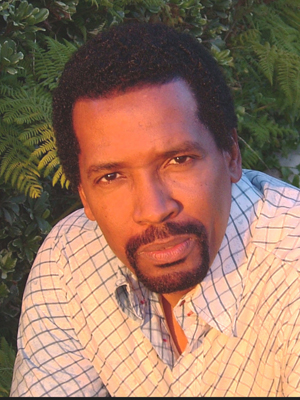
Licensed psychotherapist with over thirty years of practice. Founder of Causation Therapy, a consciousness-based method for resolving the root causes of emotional and karmic wounds. Author, teacher, and founder of Realization Psychology.
Go Further
How to Stop Creating Heavy Karma Starting Today
Understanding how karmic trauma forms is the first half. This booklet is the second: how karma is actually made, mostly in small unconscious moments rather than dramatic ones, and how to stop adding to it.
Ready to work with this directly? See session options, or start with the free booklet What Karma Really Is.