You've done the work. Years of it, maybe decades. You have sat with skilled therapists, examined your childhood, named your patterns, read the books, done the journaling. You understand, intellectually, where it comes from. And the wound is still there.
I want to begin by saying something clearly: this is not your failure, and it is not the failure of the therapists who worked with you. It may mean the wound began before this life.
Understanding that matters, because it changes everything about what comes next.
What Traditional Therapy Does — and Where It Stops
Conventional psychotherapy, whether cognitive-behavioral, psychodynamic, somatic, or any of the many approaches practiced today, is genuinely valuable. It builds insight. It develops coping capacity. It maps the terrain of the mind in ways that matter. I am not dismissing it.
But these approaches share a foundational assumption: the cause of your suffering is accessible within the boundaries of this lifetime. The wound began in childhood, or in adolescence, or in some formative adult experience. Trace it back far enough in this life, the model says, and you will find the root.
For many people and many wounds, this is true. And for those people, conventional therapy works beautifully.
But for others, perhaps for you, this assumption is incorrect. Not because your childhood was uneventful, but because the origin of the wound is not in this childhood at all.
Understanding a wound does not close it. The wound lives deeper than the mind that is doing the understanding.
The Problem of Understanding Without Resolution
Here is what I have observed across thousands of clinical sessions: people can achieve complete intellectual understanding of their patterns. They can trace the dynamic back to its childhood source, articulate it precisely, understand its mechanism. And they still repeat it. Compulsively, inevitably, against their own will and best intentions.
This is not a mystery. It is information.
It means the pattern is not being driven primarily by a thought or a belief. It is being driven by something beneath the reach of cognition: something in the body, in what I would call the soul's memory. No amount of talking about a wound at the level of the mind will discharge a charge that lives at a deeper level.
A client I worked with some years ago had spent eleven years in therapy. She was intelligent, deeply self-aware, and utterly sincere in her desire to heal. She could describe her childhood dynamics with the precision of a trained clinician. And every few years, without choosing it, she would find herself recreating the same essential experience, the same emotional reality, in entirely new circumstances.
When we did the work together, we discovered the origin of the pattern was not in her childhood. It was in an experience in a prior lifetime: a vow she had made, a wound she had sustained, an energetic charge that had never been fully discharged. Once it was found and resolved at that level, the pattern stopped. Not managed. Stopped.
What Lies Beyond the Reach of Conventional Therapy
I am not asking you to take this on faith. I am asking you to consider it as a hypothesis that might explain the data of your own life.
If you have worked genuinely hard at your healing, if you have done everything the conventional model asks, and the wound persists, the most logical conclusion is not that you have failed, or that you need to try harder, or that you need a different technique within the same framework. The most logical conclusion is that the framework is missing something.
In my clinical experience, that missing something is almost always the same: the assumption that the cause is in this lifetime.
Causation Therapy returns you to the moment it began — wherever that was.
What a Different Approach Makes Possible
Causation Therapy works differently in one fundamental way: it does not assume the origin is in this lifetime. Instead, it tracks the wound back to its actual source, using the client's own consciousness, in full waking awareness, without hypnosis.
What people find, in session after session, is that they arrive at an experience they recognize. Not as something they have been told about or imagined, but as something they genuinely remember: an event in another time and place, with an emotional reality that perfectly explains what has not made sense in the current life.
Resolution at that level is not management. It is not coping. It is the discharge of the original charge, at the point where it was created. When that happens, the pattern (the compulsion, the fear, the recurring wound) does not need to be managed anymore. It simply ceases to run.
I have watched this happen thousands of times. It is not dramatic in the way people expect. It is quiet. Clients often describe it as finally being able to exhale. A weight they have carried so long they thought it was simply who they were, suddenly gone.
A Note on What This Is Not
This is not a dismissal of traditional therapy. For many people and many presentations, conventional approaches are exactly right. And for people who do work in Causation Therapy, they often find that the years of prior insight work were not wasted. They created the self-awareness to make the deeper work more precise and more effective.
This is also not a promise. The work is real work. It requires willingness to go to places that feel unfamiliar, to sit with experiences that may be intense, to bring everything you have to a process that asks a great deal.
But if you have tried what you have tried and the wound persists, you are not out of options. You may simply have not yet found the one that addresses the actual cause.
Dr. Charles Richards is the founder of Causation Therapy, a consciousness-based psychotherapy method he has developed over more than thirty years of clinical practice. He works with clients privately and trains therapists internationally.
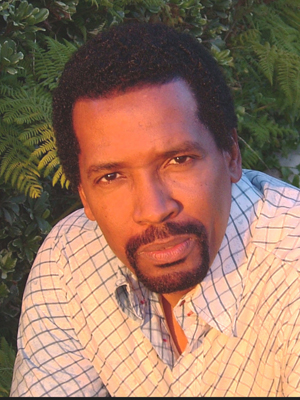
Licensed psychotherapist with over thirty years of practice. Founder of Causation Therapy, a consciousness-based method for resolving the root causes of emotional and karmic wounds. Author, teacher, and founder of Realization Psychology.
Go Further
Soul Journeys: The Soul’s Path Between Lives
If the piece above named something you recognized, this booklet takes it further: where the soul goes between lives, and how a process that works at that level reaches what talk alone leaves untouched.
Ready to work with this directly? See session options, or start with the free booklet What Karma Really Is.