I have sat with several thousand people while they described dying. Not their own death, but deaths they lived through in other lifetimes, recalled in an altered state during a session. What they tell me is unexpectedly consistent, and this is my account of it.
I want to be careful about what I am claiming, so let me say at the start what this is. It is not doctrine and it is not proof. It is what people report when you guide them past the moment their body stopped and ask them to keep going. I have been doing that work for over thirty years, and the sequence they describe has enough shape to it that I think it is worth setting down plainly.
Much of what follows draws on one long session, with a client I call Joan in my book Karmic Relationships. Hers is unusually articulate, but nothing in it is unusual for the work.
Leaving the body
The first thing people say is that it was easier than they expected.
The soul often wants to be outside the body before the body has fully stopped. After death, most people describe moving out and away quite quickly, sometimes after a brief look at the surroundings they are leaving. Some linger, and when they do there is usually a reason for it: a love attachment they cannot set down, or confusion, or anger, or something unfinished they are still trying to influence.
Joan had just lived out a long life as a Sioux man, a warrior who ended as a storyteller trying to keep the history alive for the young. She died in winter, laid on her back in a headdress with her face painted. What she describes next is looking down, seeing the burial place already prepared, and noticing the sky begin to brighten.
"We are walking but we are not walking. We just move through what appears at first to be clouds and later, look like colors."
Someone is usually waiting
This is the part that surprises people most, and it is close to universal in the sessions I have run. Almost nobody arrives alone.
There is a figure, and the person recognises them immediately. Often it is someone who was family in an earlier life. Joan's was a guide she called Yoseph, who had been her grandfather in a previous lifetime, and who appeared to her as an old chief in a headdress that reached the ground, holding out his hand and telling her not to be sad.
What he says to her is the thing I have heard, in one form or another, more times than I can count: remember that this was just one life, and it is not really where you live.
People frequently weep at this point in a session. Not from grief. From recognition.
Rest, then reunion
When a lifetime has been particularly hard, what comes next is rest rather than anything ceremonial. Joan asked to sit by a lake that looked like the land she had just left, and sang to herself until she was ready. Her guide went away and came back.
Then the others arrive, and the mood changes completely. Clients describe something closer to a party than a solemnity: souls they have known across many lives, recognisable not by face but by a quality, flashing images of all the different appearances they have worn, teasing, asking do you remember me? Joan counted six or seven. She describes it as a happy time.
If the group decides it wants to be in a meadow or by a lake or in the mountains, it is simply there. Surroundings in that state appear to follow attention rather than the other way round.
The review, which is not a judgment
Most traditions carry some version of a day of judgment, and the sessions do describe a review. But in thirty years I have yet to have a client describe being condemned.
What they describe is closer to a teacher sitting down with a student to look at the work. Joan's guide took her to a small pavilion, sat her at a table, and said, in effect, let us think about what you learned. She told him she had come to love her people and the land, and that even knowing death was not permanent, the physical business of dying had been hard, and she did not want to do it again.
He said yes, she could be done with that. Then he showed her scenes from earlier lives in which she had been the brutal one, and said something I have thought about ever since: you had to learn the other side of it to be free of it.
That is the logic of the whole review as far as I can tell. Not punishment for the harm, but the requirement to have stood in both positions before you are released from either.
The tone is consistently gentle. Joan's guide teased her for being lazy, and told her the life she had just found so difficult was, in fact, one of the easier ones, and that the next would ask more of her. She laughed at him.
The council, and what limits the choice
After the review with the guide comes a meeting with a group. Clients call it a council or a board, usually three or four, sometimes more, sitting in a row. They are described as familiar rather than imposing. Joan saw them as old and wise, two of them women, and said clearly that they took the form she gave them.
Their purpose is practical: to work out, with the soul, what the next life should contain. They have what she described as a ledger, and they go through what is still outstanding.
Two things are being weighed. There is the karma, meaning the specific people and situations still unresolved, and then, separately, there is what the soul asks to learn. Joan chose love.
The choice is not unlimited. What you carry forward as debt narrows the options; what you carry forward to your credit widens them. One client described the way the pieces fit as precise clockwork. And the council is careful in a particular direction, which I find telling: they take trouble not to let a soul take on too much.
"They are very careful not to let me take on too much."
Choosing the life
What follows is more specific than most people expect.
Joan was shown possible lives the way you would watch scenes from a film, three or four family situations she could enter. The body, the timing, the family, the circumstances that family would be in. She chose to come back female, having just been male, on the grounds that she would find it easier to express the loving nature she had asked to develop. She was also, she admitted, tired of being beaten up.
Then the parents, and here Joan was careful. She said that once you are in a body it is difficult to keep the compass straight, which made the choice of mother the important one. She wanted her guide. She wanted him so much that the council agreed it was the right arrangement, and she understood what she was accepting when she asked for it: that he would not be with her on the physical plane for long.
Her own words for that were it will be limited, but it will be enough. I have thought about that sentence more than almost anything else in this work, because it is a choice made with the loss already included, by someone who would not remember making it.
A hard-looking life is not a worse draw. Circumstances that seem short on money or education or advantage often turn out to be the ones that produce the most movement. What looks desirable from inside a human life and what is useful to a soul are not always the same list.
The map you agree to forget
Before returning, there is a period of study. Clients describe being briefed on the shape of the life to come, marking the points where a recognition is meant to land, running it through like a film and trying to fix the details in memory: places, faces, a look, even a smell.
Joan's account of this is the part I find most human. She studied her map alone and quietly, thinking, this is going to be easy, I can do this — and completely failing to allow for what happens to such memories once you are inside a body.
Because you do forget. The accounts agree on that. What survives is not the map but the capacity to recognise something when you meet it: the person you know immediately, the decision that arrives with a certainty you cannot account for. That will-to-action, when it comes from the heart rather than the mind, is what I understand to be the soul's prompt, and the residue of a plan you made and no longer remember making.
The entry itself is late and reluctant. Souls describe spending time near the mother while the body grows, tuning to it, and then slipping in shortly before birth. Compared with what they are leaving, the body is described as constrictive and heavy, and there is no great hurry to get into it.
What I can and cannot tell you
I have tried to report this the way it comes to me rather than tidy it into a system, and I want to be equally plain about its limits.
These are accounts given by people in an altered state. They are not measurements. The consistency across thousands of sessions is real and it is the thing that changed my own mind, but consistency is not proof, and I would not ask anyone to take it as such. It is also worth saying that the people who find their way to this work are not a random sample of the population. They arrive already open to the possibility, and that will shape what they find.
What I can say is narrower and, to me, more interesting. People who go through this in a session tend to come out the other side less afraid. Not persuaded of a doctrine. Less afraid. That change holds up whatever you conclude about where the material comes from.
You do not have to wait to do the review
The part of this that is available to you now is the review itself, and it does not require an altered state or a practitioner. It requires honesty and an afternoon.
Take the significant relationships you have had so far, of any kind. For each one, name the dominant theme: trust, betrayal, accountability, forgiveness, non-judgment, tenacity. Then ask what that theme has taught you about yourself.
Then the harder questions. What would you do differently to bring those relationships closer to balance? Is there one you could begin to settle now, this year, while everyone involved is still alive? Why did you choose the parents, the friends, the colleagues you ended up with, and what did each of them put in front of you?
And finally: what were the crossroads? The moments when you felt a clear inner direction and followed it, or felt it and did not. How did you recognise them at the time, and how might you recognise the next one sooner?
That last question is the useful one, because if there is anything to the map, it is the only part of it you still have access to.
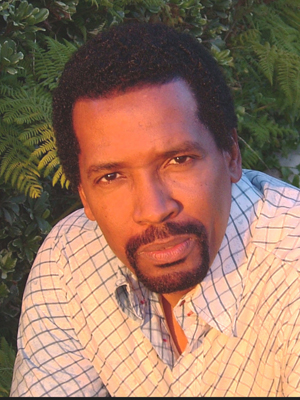
Licensed psychotherapist with over thirty years of practice. Founder of Causation Therapy, a consciousness-based method for resolving the root causes of emotional and karmic wounds. Author, teacher, and founder of Realization Psychology.
The Whole Series
The Way of Karma: All Five Booklets
The fifth booklet in the series, What Really Happens When You Die, takes this further than an article can. The complete set follows the whole arc: how karma forms, how it carries forward, what resolves it, and what happens when a life ends.
Ready to work with this directly? See session options, or start with the free booklet What Karma Really Is.