A client came to me after her third marriage had ended the same way as her first two. She had done years of therapy. She had, in her own words, "done the work." She understood, with precise clarity, what was happening. But understanding didn't stop it from happening again.
She is not unusual. In my thirty years of clinical practice, this is one of the most common experiences people bring to my office: the pattern that persists despite everything they have done to end it. The relationship that keeps ending the same way. The career that keeps stalling at the same point. The financial cycle that rebuilds and collapses with the same inexorable rhythm.
What is happening? And more importantly, what actually stops it?
Patterns Are Not Your Fault. But They Are Your Signal.
The first thing to understand about a repeating pattern is what it is not: it is not a character flaw, not a moral failing, not evidence that you are broken or beyond help. A pattern is a signal. It is your soul pointing at something unresolved.
When the same dynamic keeps appearing across entirely different circumstances (different people, different cities, different jobs) it means the dynamic is not coming from the circumstances. It is coming from you. Not because you are causing it intentionally, but because you carry something that generates it.
The question is not "what is wrong with me?" The question is: "what is the charge I am carrying, and where did it originate?"
Why Awareness Isn't Enough
We live in a therapeutic culture that places enormous faith in insight. Name the pattern, trace it to its origin, understand the mechanism, and freedom follows. This is a profound and partially true idea. Insight is necessary. But it is not sufficient.
The reason awareness alone cannot break a deep pattern is structural, not psychological. The pattern does not live primarily in the mind. It lives in what I call the soul's memory: a level of encoded experience that operates beneath cognition, beneath emotion, beneath even somatic awareness.
The pattern doesn't live in your mind. It lives in your soul's memory — and that is precisely why thinking about it has never been enough to end it.
You can understand a karmic charge completely. Name it, explain it, trace it. The charge remains. Because the charge was not created by a thought. It was created by an experience, often an experience of great intensity, in which a wound was sustained, a vow was made, or a belief was locked into the fabric of the soul at a level below ordinary consciousness.
Talking about it, even brilliantly, does not discharge it. It can loosen it. It can bring it toward the surface. But the discharge has to happen at the level where the charge was created.
Where Patterns Actually Come From
Some repeating patterns do originate in this lifetime: in childhood experiences, in early relational wounds, in formative events that laid down grooves the mind has followed ever since. For these, good therapeutic work can and does reach the source.
But some patterns cannot be traced to anything in the current life. The person did not have a difficult childhood. Their relationships with parents were reasonably healthy. There is no obvious origin story, and yet the pattern is as vivid and as compulsive as if the wound were fresh.
In my clinical experience, these are almost always karmic patterns: imprints from prior lifetimes. A wound sustained in a previous life that was never resolved. A decision made under duress, perhaps a vow of poverty, a vow of isolation, or a choice made in desperation, that has quietly been running the show ever since.
The soul does not forget. It carries forward what has not been resolved. And it will continue to generate the circumstances that point toward that unresolved charge until the charge is finally discharged.
Breaking a pattern doesn't require understanding it better. It requires going back to where it began — and in many cases, that is not in this lifetime.
The Difference Between Managing a Pattern and Ending One
There is an important distinction worth making explicit: the difference between managing a pattern and actually ending it.
Managing a pattern means developing enough awareness and skill to catch yourself before the pattern runs its full course: to intervene, to choose differently, to minimize the damage. This is valuable. Many people live much better lives through skillful pattern management.
But it requires ongoing effort. The charge is still there. The pull is still there. You are choosing against it, repeatedly and deliberately, forever.
Ending a pattern is different. When a karmic charge is discharged at its source, when the soul revisits the originating experience, discharges the energy held there, and is freed from the vow or wound or decision that created it, the pattern stops running. Not because you are managing it. Because the engine that was driving it no longer exists.
This is what my client with three marriages experienced. After a single intensive session in which she accessed, in full waking consciousness, the prior life experience that had generated the pattern, something shifted that had held fast for years. She described it afterward as "the thing I was always fighting against just... being gone."
What It Takes to Actually Break Free
The process is not complicated, but it requires willingness. Willingness to consider that the origin of your pattern may lie further back than this lifetime. Willingness to go into your own consciousness with genuine openness. Not performance, not expectation, but real inquiry.
In a Causation Therapy session, we work in full waking awareness. No hypnosis, no altered states, no guided visualization. The client's own consciousness leads the process. What emerges is what the soul brings forward, and in my experience, the soul is an extraordinarily precise diagnostician. It brings exactly what is ready to be resolved.
The experience of finding the origin of a long-held pattern is often both completely surprising and completely recognizable. Clients frequently say something like: "I've never thought of this before, but this is it. This is exactly where it started." There is a quality of undeniable recognition that no amount of intellectual construction could produce.
And after the discharge, once the session is complete, the pattern is not something they need to manage anymore. They simply notice, in the days and weeks that follow, that the familiar pull isn't there. That the thing they were always fighting has stopped requiring a fight.
If you recognize yourself in this, if you have a pattern that has persisted despite genuine effort, one you have understood without being able to end, I would encourage you to consider that you have not yet found the actual source. The work that addresses the source exists. And it is available to you.
Dr. Charles Richards is the founder of Causation Therapy and the Soul Journeys Institute. He has conducted thousands of sessions over thirty years of clinical practice.
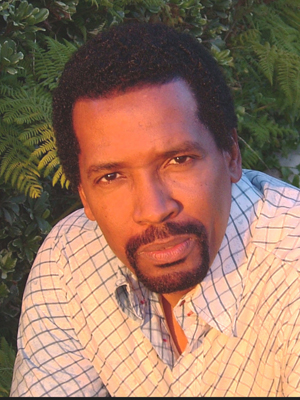
Licensed psychotherapist with over thirty years of practice. Founder of Causation Therapy, a consciousness-based method for resolving the root causes of emotional and karmic wounds. Author, teacher, and founder of Realization Psychology.
Go Further
Why Your Past Lives Are Running Your Present Life
The pattern you keep returning to usually began before this life did. This booklet shows how those impressions carry forward, the seven signatures that mark them, and what it takes to end the repetition rather than manage it.
Ready to work with this directly? See session options, or start with the free booklet What Karma Really Is.