There is a moment I have watched arrive in a great many sessions, and it is almost never the moment the client came for.
They are describing someone who has wronged them. A business partner, a parent, an ex. The account is accurate, and I have no reason to doubt any of it. Then somewhere in the telling, the shape of the thing changes. They are no longer describing what happened. They are establishing which of the two of them is the good one.
That shift is the subject of this piece, because of what it costs.
Being right is not a neutral position
The trouble with occupying the good side is that it is not a resting place. It is one half of a pair, and the pair has to be maintained.
If I am the reasonable one, someone has to be unreasonable. If I am the generous one, someone has to be taking. The position exists only by contrast, which means I now have a quiet stake in the other person staying exactly where they are. People feel this, even when nothing is said. It is why the most scrupulously fair-minded conversations sometimes leave everybody worse.
And then something less comfortable happens.
Certainty of your own goodness is what licenses you to stop examining your behaviour.
You believe you are on the good side, and you become self-righteous, and that activates the shadow, and quite suddenly you are abusing power, because you are convinced you are right.
Every organised cruelty I can think of was carried out by people who were sure they were the good ones. Not by people who thought of themselves as cruel. The certainty was the permission.
Why the shadow has so much power
In this work, the shadow is not a soft metaphor for the parts of yourself you would rather not admit to. It is the material you have put out of sight, and it is worth being precise about where it sits.
The shadow is suppressed, so it operates below awareness. But it also sits closer to the source of your power than your ordinary self-presentation does. It did not grow weaker by being hidden. It grew less supervised.
That combination is the whole problem: considerable force, no oversight, and an exit only through the side door. So it emerges indirectly. In the tone rather than the words. In the decision that was technically defensible. In the help offered with a hook in it.
The work is not to defeat it. Nothing useful has ever come of a person at war with half of themselves. The work is to have the shadow serve you rather than serve itself, and that begins with being able to see it at all, which stays difficult for exactly as long as you are certain you are the good one.
Leadership makes it visible
The pattern is easiest to see in anyone who has to lead something, because there the two positions already have names.
There is the boss, who gives orders and imposes his will, and gets compliance for as long as he is watching. And there is the leader, who is calm and works through harmony, and is told by everyone that this is the better way to be.
So the ambitious person tries to move from the first to the second, and finds the ground will not hold. The second position is still a position. It still has to be maintained, it still requires the room to cooperate with it, and it collapses back into the first one the moment something is genuinely at stake and nobody is doing what they said they would.
What people describe at that point is an exhausting oscillation. Push, and feel like a tyrant. Ease off, and watch it not get done. Push again.
It is an accurate description. They are running a pendulum, and a pendulum does not stop by being pushed more skilfully from one end.
What the other thing looks like
There is an old formulation about kingship worth sitting with.
The highest expression of the king is that everything in the realm is in order. It is harmonious, it works, and nobody has to be king. He does not even need to show up, because he holds a state that produces order rather than enforcing it. Ask who is managing and the answer is not obvious. Whoever it is operates from somewhere nobody has to notice.
Read that as a proposition about leadership and it is testable against your own experience. You have probably worked somewhere that ran like that, and somewhere that did not, and the difference was not that the good place had a more forceful person at the top. It generally had a less forceful one.
The reason it works is that nothing is being opposed. When you say do this, push, you are inside the pair, and the pair pushes back. When you are not inside it, things move because there is nothing for them to brace against.
Where this idea comes from
I did not invent any of this, and it may be reassuring rather than otherwise to know how old it is.
The Bhagavad Gita names the dvandvas, the pairs of opposites, as precisely what binds a person, and describes action free of them as action that does not bind. Not the end of acting. The end of being caught by it.
The Tao Te Ching puts it as a sequence: the Tao gives birth to One, One gives birth to Two, and everything after follows from the Two. The two are real. They are also downstream.
You will find the same observation across most contemplative traditions, generally phrased as a warning about the spiritual danger of virtue. Not of vice. Of virtue, which is the more dangerous of the two because it does not feel like a risk.
What I actually think is happening
Everything above can be taken as psychology, and it holds perfectly well as psychology. I want to say the rest of it plainly, because a piece that only gestures is its own kind of dishonesty.
After thirty years of this work, my view is that the pairs are downstream of something single. That duality is not a flaw in the arrangement but the condition that makes experience possible at all. You cannot have a life that teaches you anything unless both halves of every pair are available in it.
And a person identified with what precedes the split is not managing the opposites well. They are not standing in them. Which is why what comes to such a person tends to serve them, not through luck or protection, but because a single force does not act against itself.
I am aware how that sounds if you arrive at it cold. I would not have led with it. But I have watched it operate, in my own life and in other people's, often enough that leaving it out would be a kind of editing I am not willing to do.
Where to start, if any of this landed
Not with the metaphysics. With one question, asked the next time you are certain.
What does my being right require of the other person?
If the answer is that they have to stay exactly as they are, you have found the pair. You are not looking at them any more. You are looking at the position you need them to hold so that yours makes sense.
That noticing is small, and it is not nothing. It is the first place the grip loosens.
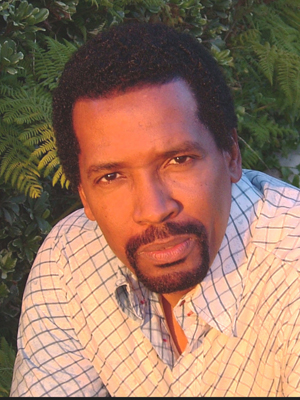
Licensed psychotherapist with over thirty years of practice. Founder of Causation Therapy, a consciousness-based method for resolving the root causes of emotional and karmic wounds. Author, teacher, and founder of Realization Psychology.
The Whole Series
The Way of Karma: All Five Booklets
The pair you are caught in with another person rarely began in this lifetime. The complete series follows how that works: how karma forms, how it carries forward, what actually resolves it, and what happens at the end of a life.
Ready to work with this directly? See session options, or start with the free booklet What Karma Really Is.